Who Will Win the 2026 Young Scientist Award for Sustainable Development?

An award for young scientists from around the world is gaining increasing appeal in Wenzhou. The 2026 Young Scientist Award for Sustainable Development received 347 valid applications, an increase of over 70.1% last year. This year’s winners will be announced during the World Young Scientists Summit, to be held on October 24–25.
Behind these figures lies a more compelling question: Why does this young-scientist award,originating in Wenzhou and reaching out globally,, continue to attract a growing number of young researchers?
Past Winners Show the Award’s Focus on Sustainable Development
A review of the winners since 2023 reveals a clear pattern: the award has consistently tracked several of humanity’s most urgent sustainable-development challenges.
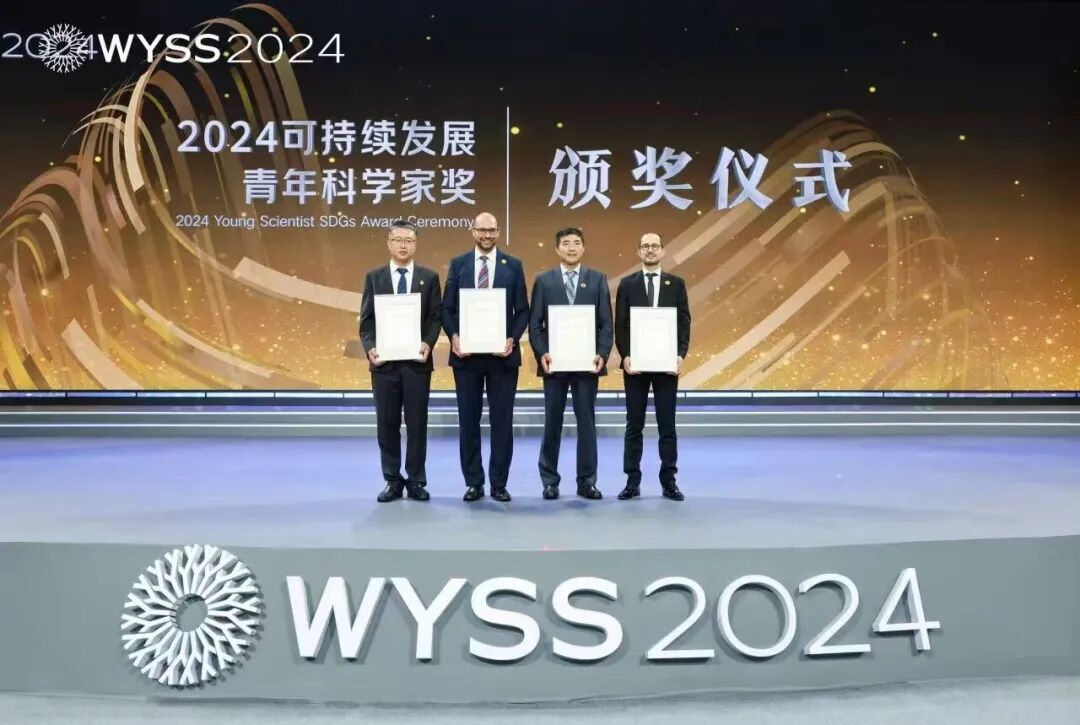
Clean energy has produced the largest number of award-winning achievements. In 2023, Henry Snaith, a professor at the University of Oxford, received the award for developing efficient, low-cost perovskite solar cells. That same year, Professor Zhang Qiang of Tsinghua University was recognized for his research on lithium-bond chemistry and electrochemical energy storage. In 2024, Professor Guo Shaojun of Peking University made breakthroughs in key materials for green hydrogen production and fuel cells. In 2025, Professor Wolfgang Tress of the Zurich University of Applied Sciences in Switzerland was honored for his work on the device physics of perovskite solar cells.From hydrogen production to storage, from lithium batteries to perovskite devices, the award's focus on energy research has been consistent and systematic.
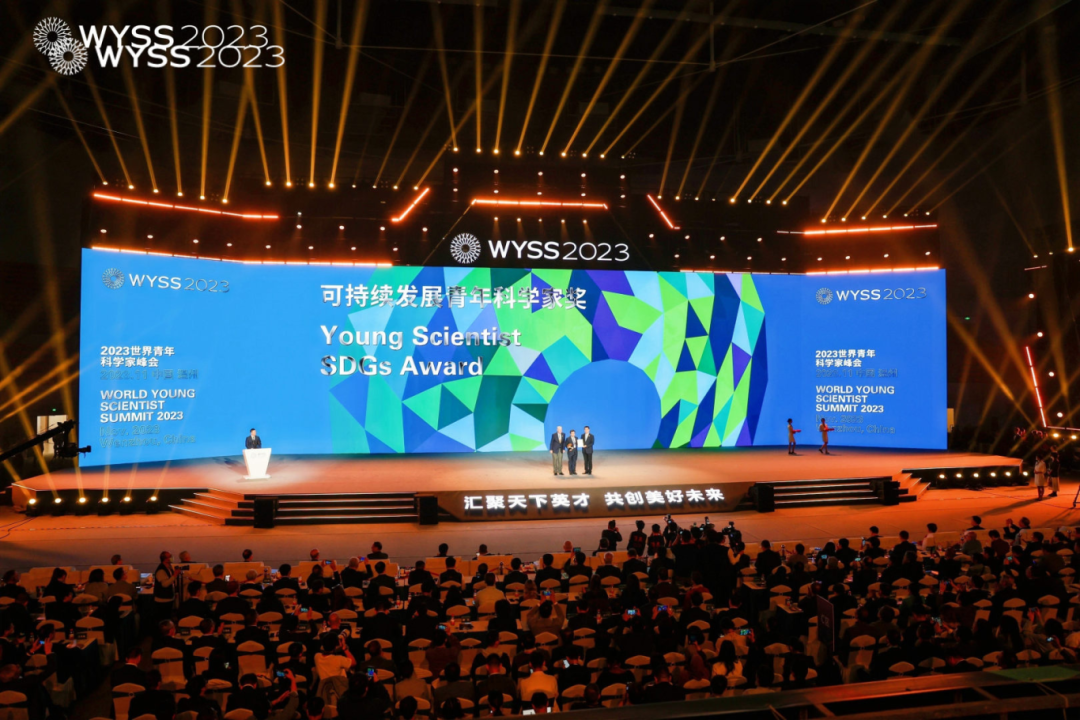
In an interview after receiving the award, Guo Shaojun said, “This is a very important international award for young scientists, and it can better promote innovation in science and technology among young researchers.” He added that his greatest takeaway from attending the Summit was meeting young scientists from different countries. After the event, he had in-depth discussions on carbon-dioxide reduction technologies with French award recipient Damien Voiry, saying, “I hope we can build a long-term partnership in the future.”
In health and well-being, the award has also highlighted remarkable achievementsIn 2025, Professor Mariangela Russo of the University of Turin in Italy was the first to reveal the “stress-response mechanism” of colorectal cancer in response to targeted therapy, opening up a new strategy for precision cancer medicine. In her acceptance remarks, she said, “This recognition is not only a personal honor; it also reminds us of the responsibility we share—to build a more sustainable and inclusive future.”
Industrial innovation and interdisciplinary research have also become increasingly prominent in recent years. In 2025, Professor Wang Hui of the University of Science and Technology of China was honored for his key contributions to Jiuzhang, a photonic quantum-computing prototype. That same year, Yingjun Liu, co-founder of the UK-based company Porotech, was recognized for overcoming a major obstacle to mass-producing full-color microLED displays and advancing recyclable-wafer technology to reduce semiconductor waste. In 2024, Professor Guihua Yu of the University of Texas at Austin continued to make advances in the synthesis of novel nanomaterials. In 2023, Professor Lou Xiongwen of City University of Hong Kong made breakthroughs in nanostructured-material synthesis and sustainable electrochemical energy storage.
All researchers who have received the award were under the age of 45 at the time of winning. The award focuses on young scientists and looks to the future.
More Valid Applications: What Problems Are Young Scientists Tackling Together?
This year, the award received 368 applications in total, of which 347 were deemed valid—up 70.1% from the 204 applications received in 2025. Applicants ranged in age from 23 to 45, with an average age of 39.1. There were 57 applicants under 35, accounting for 16.5%; 108 aged 35–39, accounting for 31.1%; and 182 aged 40–45, accounting for 52.4%. Experienced early- and mid-career scholars over 35 remain the main applicant group, but younger researchers under 35 are also joining the pool.
By research area, the largest group—104 applicants—worked across multiple Sustainable Development Goals (SDGs). Young scientists are increasingly using interdisciplinary approaches to address complex sustainability challenges. This was followed by SDG 9 (Industry, Innovation and Infrastructure), with 87 applicants; SDG 3 (Good Health and Well-being), with 80; SDG 7 (Affordable and Clean Energy), with 52; and SDG 13 (Climate Action), with 24.
This year’s applicant pool was more international than in previous years. Of the 347 valid applications, 69 came from international applicants, representing 19.9% of the total and spanning 31 countries and regions. There were 11 applicants from the United States, six from Argentina, five from Pakistan, and four each from Australia and Italy. In 2025, the award received 204 applications from 29 countries and regions. The award’s global reach is growing.
Nearly half of the applications came through nominations, reflecting growing recognition of the award among universities and research institutions. In terms of application method, 185 applicants nominated themselves (53.3%), while 162 were nominated by others, including institutions (46.7%). More universities and research institutions are using the award as an important channel for putting forward their own young talent.
The Winner Will Be Announced During the World Young Scientists Summit
This year’s applications were concentrated in three areas: cross-cutting work spanning multiple SDGs, with 104 applicants; SDG 9, Industry, Innovation and Infrastructure, with 87; and SDG 3, Good Health and Well-being, with 80. These broadly align with the research areas represented among winners over the past three editions.
SDG 13, Climate Action, has also attracted sustained attention in previous rounds of judging. Henry Snaith’s perovskite solar cells in 2023, Gosling’s quantification of climate-change risks in 2024, and Wolfgang Tress’s work on perovskite-device physics in 2025 were all related to climate action.
The Young Scientist Award for Sustainable Development was jointly established by the World Laureates Association and the Wenzhou World Young Scientists Growth Foundation. Each recipient receives prize money of RMB 1 million. Since its establishment in 2023, the number of applications has continued to grow. Winners receive more than prize money: they also benefit from the promotion and real-world application of their research, local talent-support benefits, and opportunities to be recommended for participation in international platforms such as the United Nations.
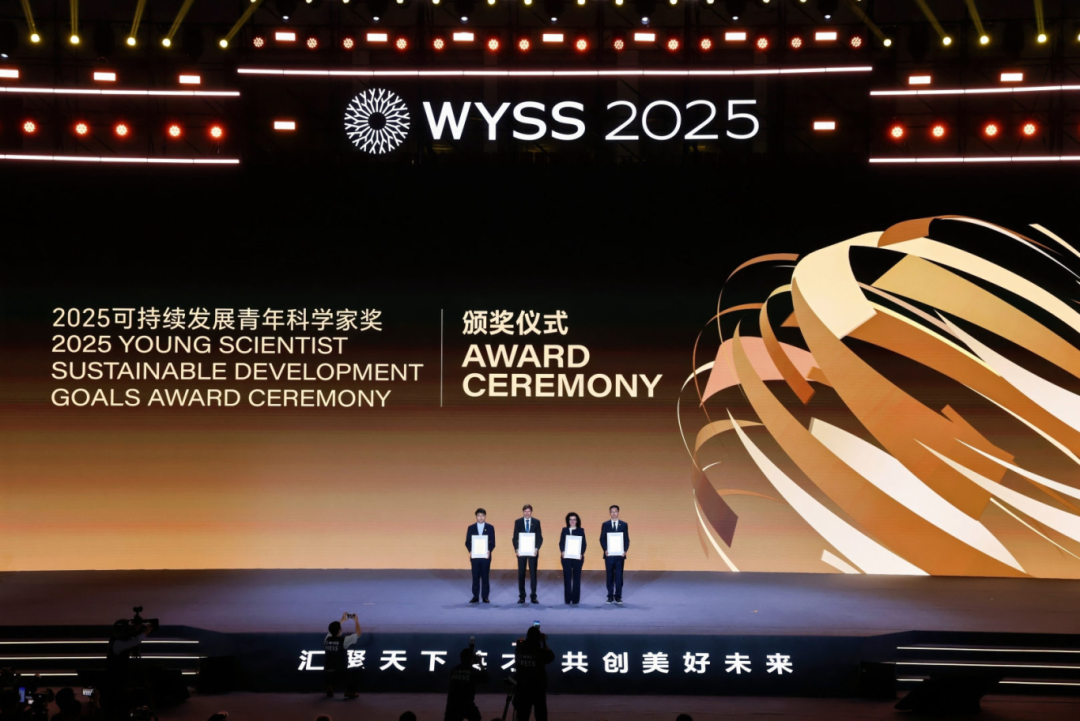
The 2026 World Young Scientists Summit will take place in Wenzhou on October 24–25. The answer will be officially revealed then.

京ICP备2025151948号-1
 京公网安备11010802046721号
邮箱:secretariat@ways.science
Secretariat Information:Tel +86 10 8100 0255